



Get It from the Right Source
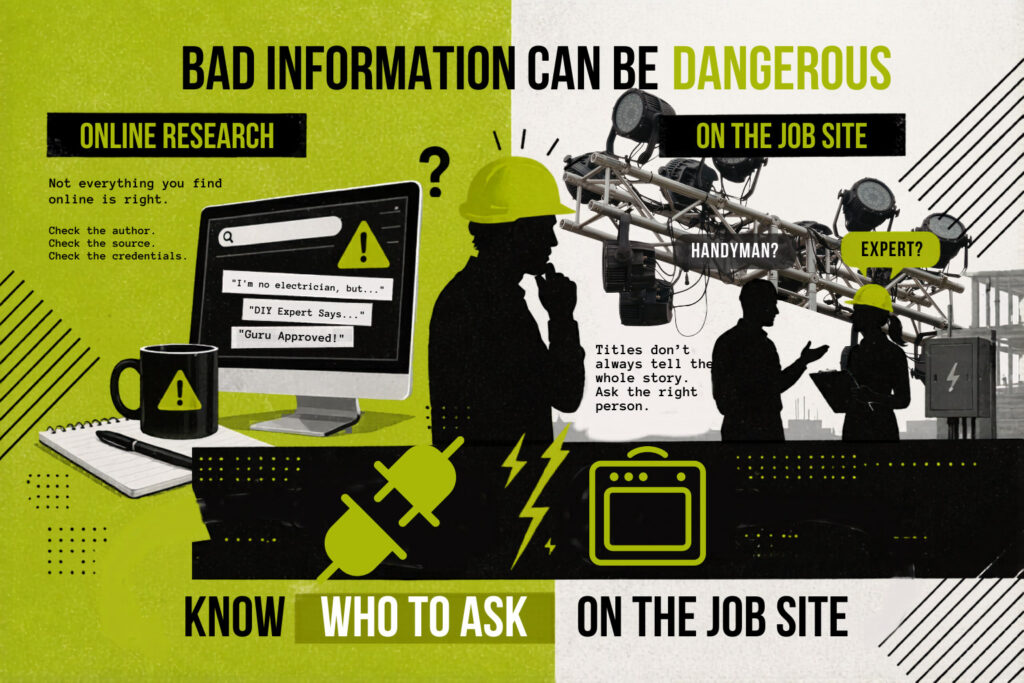
Knowing who to trust on the job site and online
Introduction
I’m going to talk about two different subjects here, but they’re closely related: information from the web, and information you get from people in the electrical field related to the job at hand.
Online Research
This blog idea started while I was researching technical information on the web. A lot of what I found was just plain wrong, and in some cases, dangerous. That’s what made me want to put something together that might help you decide what to trust, whether it’s coming from the web or from someone you’re working with.
When I’m doing research, the first thing I look at is the name of the site. It’s not foolproof, but it can tell you a lot. If the name includes things like Handyman, Do It Yourself, Guru, or Expert, that’s usually a red flag.
Next thing—look at the “About the Author.” That should tell you what their qualifications are. If someone calls themselves an “expert” but doesn’t list any credentials, they’re probably not one.
You’ll also see a lot of forum responses that start with:
“I’m no electrician, but…”
That should be enough right there.
Trade magazines are usually a better source. Most of the time, their content is reviewed by people in the industry.
Don’t take electrical advice from sound techs or DJs, and don’t take sound advice from electricians. Go to the right person for the job.
On the Job Site
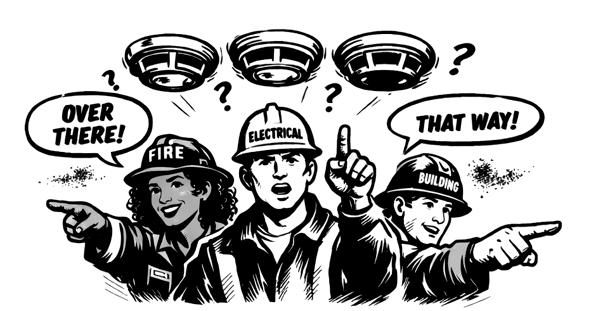
Many years ago, when I was an electrical contractor, I was installing a smoke detector system in a small commercial building. There were three inspections required: Electrical, Fire, and Building.
Each inspector had a different opinion on where the smoke detectors should be placed. So, what was I supposed to do? No matter where I put them, I was going to fail two out of the three inspections.
I ended up contacting the construction official at the state level for some help. Here is the official determination:
The Fire Inspector approves placement
The Electrical Inspector approves the wiring
The Building Inspector just makes sure they’re there and working
There you have it. That’s exactly what I’m talking about. Make sure you’re talking to the right person.
These were all experienced, licensed professionals, and even they got it wrong at first.
Something to Think About
When you’re on a job site, don’t be condescending, even if someone isn’t your favorite person to deal with. Or just because someone doesn’t have a title or formal qualifications doesn’t mean they’re not useful. Sometimes they know the building, the people, or how things get done. Treat everyone with a little respect. Worst case, nothing happens. Best case, you save yourself a long day.
Job Titles You’ll Run Into
I’m going to go through some of the job titles you’ll run into while doing electrical work and give a basic idea of what they do and what their qualifications might be. A lot of these positions overlap.
Prelude Notes: When I refer to the code, I mean the National Electrical Code, NEC.
If you do not deal with permanent installations, some of this may not apply, but it’s still
worth knowing.
Handyman, Possibly the Janitor
Good person to know. They may not be highly technical, but they usually know the building, where things are, where the panels are, and how to get in and out after hours. Just don’t rely on them for technical details like voltage.
Electrical Apprentice
This is the new person. They’re learning. Unless someone tells them to help you, they don’t work for you. If you need something done electrically, they’re not your go-to.
Electrician, Journeyman
This person usually knows their trade and can work on their own. But watch out, some specialize. Someone might have 30 years bending pipe and not know much outside of that.
Depending on the state, they may or may not have had to pass a general knowledge test. Some know the code well, some don’t, they just do what they’re told and do it well.
If you find someone who knows stage lighting or sound systems, that’s someone you want to know.
Electrical Foreman / Superintendent / Chief
On bigger jobs, this is the person running the show for electrical.
They manage people, materials, and job performance. They’re also tied into profit and loss.
They may not know the code inside and out, but they follow the plans and make sure the job gets done.
Licensed Electrical Contractor
This is the license holder, the one with business, insurance, and responsibility.
If something goes wrong, it’s on them.
They’re the top authority for the electrical work on the job. Everyone works for them. They’re also required to keep up with continuing education, usually tied to NEC updates every three years. Bottom line, they should know the code.
Low Voltage Specialist
In some states, this requires a license. It covers things like fire alarms and audio systems. Rules vary, but generally they’re limited to lower voltages and may not be allowed to work on higher-voltage permanent systems.
Electrical Inspector / Sub-Code Official / AHJ
These roles overlap, and they usually work for the local municipality.
The Electrical Inspector checks that installations meet code. Sometimes that includes temporary setups.
If they tell you to do something, do it. You can argue later, but not during a show.
Sub-Code Officials handle permits and paperwork.
The AHJ, Authority Having Jurisdiction, can include multiple people, Electrical, Fire, Building Inspectors, even police. Anyone with the authority to shut you down.
Electrical Engineer / Electrical PE / Structural PE
A PE, Professional Engineer, has higher-level licensing and usually specializes. They can override inspectors in some cases. You usually don’t need a PE for temporary power, but you may need Structural PE if you’re hanging anything from the building. Always check with the local building department first.
Architect
You may not deal with them much, but when you do, they care about how things look. Start drilling holes in walls, and you may have a problem. Sometimes they control the final appearance of an installation, depending on the project.
Technical Director
The Technical Director, TD, is the senior technical person for a venue or touring group. They know how the show runs, lighting, sound, cues, all of it. Check in with them before and during setup. They’re someone you want on your side.
Gaffer / Best Boy
The gaffer is the head electrician for a production, responsible for executing the lighting plan. They may not be licensed contractors, but they’re usually very experienced and considered qualified. They manage equipment, labor, and setup under the Technical Director. The Best Boy is the gaffer’s assistant.
Conclusion
Get your information from the right sources, someone who is qualified and has the authority to give it. Be especially careful with information you find online. Everything here is based on personal experience and interpretation. Always check with local authorities when it comes to code and jurisdiction.
Motion Labs is here to help.
Ask questions, give feedback, and suggest topics. Some of this may be open to debate, if you disagree or need clarification, say so.
DISCLAIMER
This blog is intended to provide information to people in the live entertainment industry to enhance their technical knowledge and provide a better understanding of equipment safety related to truss systems.
The opinions expressed here are personal interpretations. Always verify specifications to ensure equipment meets your requirements. Be mindful of vague specifications and less than reputable providers.
Information provided is for general guidance only. Specifications, configurations, and requirements may vary by application. Always consult a qualified professional before installation or use
Motion Labs encourages questions, feedback, and suggestions for future topics.
About the author:
Jim Herrick, over 40 years’ experience in the electrical field. Licensed in the State of New Jersey as an Electrical Contractor (License #6748) and Electrical Inspector (License #7702). Of the 40 years’ experience, 30 of which included work in the theatrical industry, which also included electrical equipment design for major companies in the industry.